Slashes with stems, which usually indicate the rhythm to be played, but not the pitches.


Slashes without stems, which do not usually indicate either rhythms or pitches.
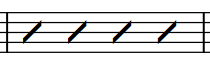
In pop and jazz settings It can be fairly common to not give specific written out parts to instruments in the rhythm section (bass, drums, keyboards, guitars) and instead give them a general outline and/or chord charts.
The following is reprinted from: https://archive.steinberg.help/dorico/v2/en/dorico/topics/notation_reference/notation_reference_rhythm_slashes_c.html
Rhythm slashes are diagonal lines positioned on staves that are used to indicate that performers should play something, but without specifying the exact rhythms and pitches. They are often accompanied by chord symbols to indicate the set of notes the performer should use.
There are two different types of rhythm slashes:
Slashes with stems, which usually indicate the rhythm to be played, but not the pitches.
Slashes without stems, which do not usually indicate either rhythms or pitches.
Slashes with stems are also known as rhythmic notation, and slashes without stems are also known as slash notation.
Slash notation, along with chord symbols, may often be given to members of the rhythm section who will create their own parts based on the given chords.
<aside> 📌
Slash notation is often given to instrumentalists who are expected to improvise over a set of chords*.*
</aside>
When there are specific rhythms or hits those may use rhythmic notation:

Like the rest of the rhythm section, drums will typically use slash and rhythm notation. In the studio, I rarely feel the need to notate the specific beat, as simply letting the drum hear the piece is enough to give them a good sense of the kind of beat they should play—and they are usually going to come up with something better than me anyway!
